Mojiko and Karato Market Day Tour from Fukuoka: 2026 Guide
By Georgi · Updated · 7 min read
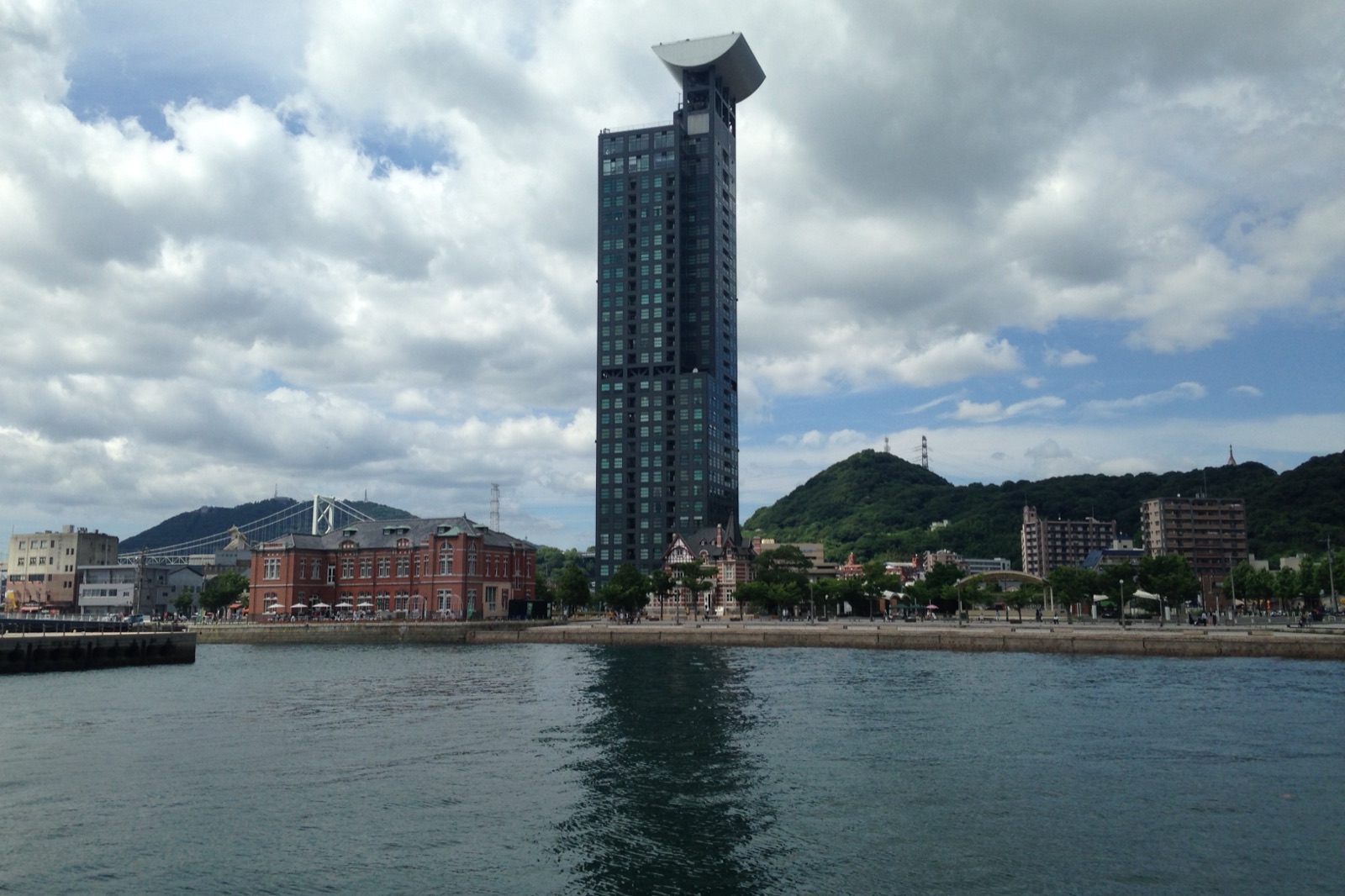
Mojiko Retro is a Meiji-era port district preserved almost intact on the northern tip of Kyushu, and it faces Shimonoseki across a strait narrow enough to feel like a river. On the other side sits Karato Market, Shimonoseki’s seafood market.
That geography is what makes the Mojiko and Karato day tours interesting. You get two very different places (a preserved port district on the Fukuoka side, and a lively fish market on the Yamaguchi side) in a single day, separated by about a kilometre of water and a prefectural border. Doing it independently means working out the Kanmon ferry or the undersea pedestrian tunnel, timing the market’s busiest hours, and getting back to Fukuoka without a car. A tour packages that route for you.
What makes this pairing worth a day
Mojiko and Karato aren’t on the main tourist trail the way Hiroshima or Kyoto are. But the combination packs a lot into a few hundred metres on each side of the strait.
Mojiko Retro, the historic district around Mojiko Station, grew as an international trading port from the late 1800s. The customs house, the old trading company offices and the station were preserved rather than demolished, which gives the waterfront a coherence you rarely see in Japanese cities. Mojiko Station (opened in its current building in 1914) was the first railway station building designated a national Important Cultural Property (Kitakyushu city). The Blue Wing Moji, a pedestrian drawbridge, lifts six times a day.
Karato Market in Shimonoseki is one of the best fish markets in Japan for eating on the spot. Shimonoseki is Japan’s best-known fugu (pufferfish) town, and from Friday to Sunday and on holidays the market runs its Iki-iki Bakangai event, when stalls sell sushi, seafood bowls and fugu soup to eat on the waterfront (Karato Market official site).
The hard part is doing both in one day from Fukuoka without a car. That is what the tours solve.
Tour route at a glance
Itineraries differ by operator, but a typical Mojiko and Karato day looks like this (check your listing for exact times):
- Morning: pickup in Hakata, then about an hour north to Kitakyushu.
- Late morning: Mojiko Retro walk: Mojiko Station, the Old Moji Customs Building, the Blue Wing Moji drawbridge, often a chance to try yaki-curry, Mojiko’s local dish of curry and rice baked in the oven.
- Midday: cross the strait to Karato Market for lunch, by the 5-minute ferry or by road over the Kanmon Bridge.
- Afternoon: time at the market and on the Karato waterfront looking back at Mojiko.
- Evening: drive back to Hakata. Some variants add Motonosumi Inari Shrine and return later.
Tour variants
The three Klook listings kitaq.travel used to compare could not be confirmed as still running in this form, so search the current options instead:
See current Mojiko and Karato day tours on KlookWhat you will typically find:
Mojiko plus Karato only
The most focused option. A full Mojiko morning and a relaxed Karato afternoon, lunch at the market on your own budget. Check the listing for price, duration and whether the guide speaks English.
Best for: first-time visitors who want both districts without an exhausting day.
Mojiko, Karato and Motonosumi Shrine
Adds Motonosumi Inari Shrine in Nagato, Yamaguchi: a line of 123 red torii running down to the Sea of Japan cliffs (Nagato city tourism). Expect a much longer day and less time at each stop. See also our North Kyushu multi-stop day tour guide.
See Motonosumi day tours from Fukuoka on KlookBest for: travellers who want Motonosumi without a separate Yamaguchi trip.
Moji plus Motonosumi (no Karato)
Some routes skip Karato and pair Moji with Motonosumi. If the shrine is your priority and seafood isn’t, this is the cleaner day.
When the tour is worth it
If you only want Mojiko Retro, skip the tour. Take the JR line from Kokura to Mojiko (about 13 minutes) and walk the district for two or three hours.
The tour earns its cost when you want Karato on the same day and don’t want to plan the crossing, the ferry timetable and the last fast train back to Fukuoka.
DIY alternative
Hakata to Kokura: Shinkansen, about 15 to 20 minutes, or the JR limited express Sonic, about 45 to 50 minutes. Check current fares on JR Kyushu.
Kokura to Mojiko: JR Kagoshima Line, about 13 minutes.
Mojiko to Karato: two options.
- Kanmon ferry (Kanmon Kisen): about 5 minutes, ¥400 per adult, sailing roughly every 20 minutes from early morning to evening, pier to pier between Mojiko and Karato (Kanmon Kisen). The simplest way across.
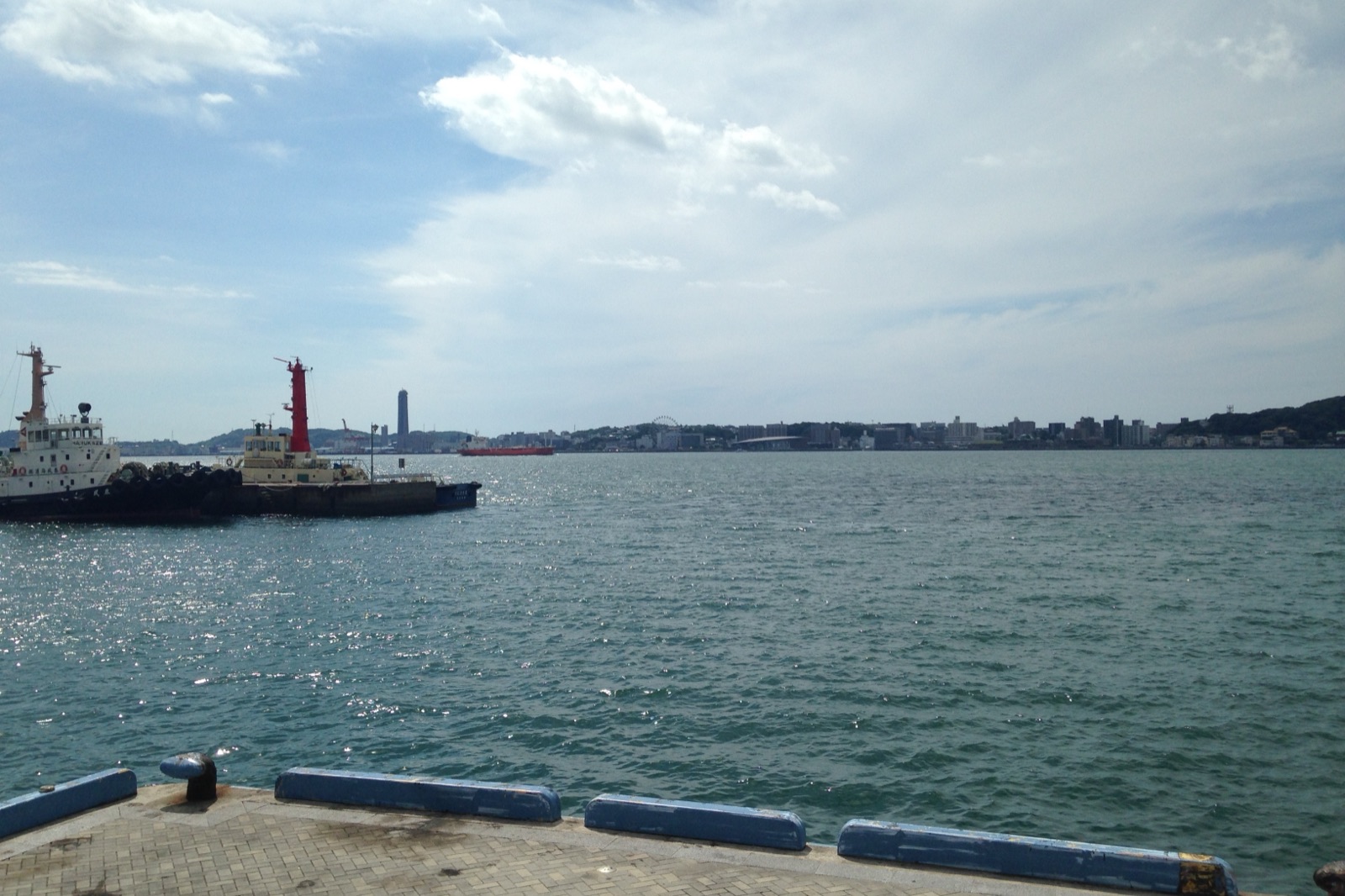
- Kanmon undersea pedestrian tunnel: free for walkers, 780 m, about 15 minutes on foot, with the Fukuoka and Yamaguchi border marked halfway. Note that it does not connect Mojiko to Karato directly: the Moji entrance is at Mekari (about 15 minutes by Nishitetsu bus from Mojiko Station), and the Shimonoseki exit is at Mimosusogawa, about 2 km east of Karato, so you need a bus or a walk along the shore (Crossroad Fukuoka). See the full Kanmon tunnel walk guide on kitaq.travel. A good loop: walk the tunnel one way and take the ferry back.
A DIY trip by train and ferry costs far less than a tour per person, especially with a JR Pass, which covers the Hakata, Kokura and Mojiko legs. For data on the road, see kitaq.travel’s Japan eSIM guide.
What’s at each stop
Mojiko Retro district
Mojiko Station (門司港駅): the 1914 neo-Renaissance wooden station building, restored and reopened in 2019. Free to walk through.
Old Moji Customs Building (旧門司税関): the 1912 red-brick customs house, free to enter, with exhibits on the port’s history and an upper-floor viewing room over the strait.
Blue Wing Moji drawbridge: lifts at 10:00, 11:00, 13:00, 14:00, 15:00 and 16:00, and closes again about 20 minutes later.
Yaki-curry: Mojiko’s local speciality, said to date from the 1950s. Many restaurants around the Retro district serve it.
More detail: kitaq.travel’s Mojiko Retro guide and Kanmon Strait Museum.
Karato Market
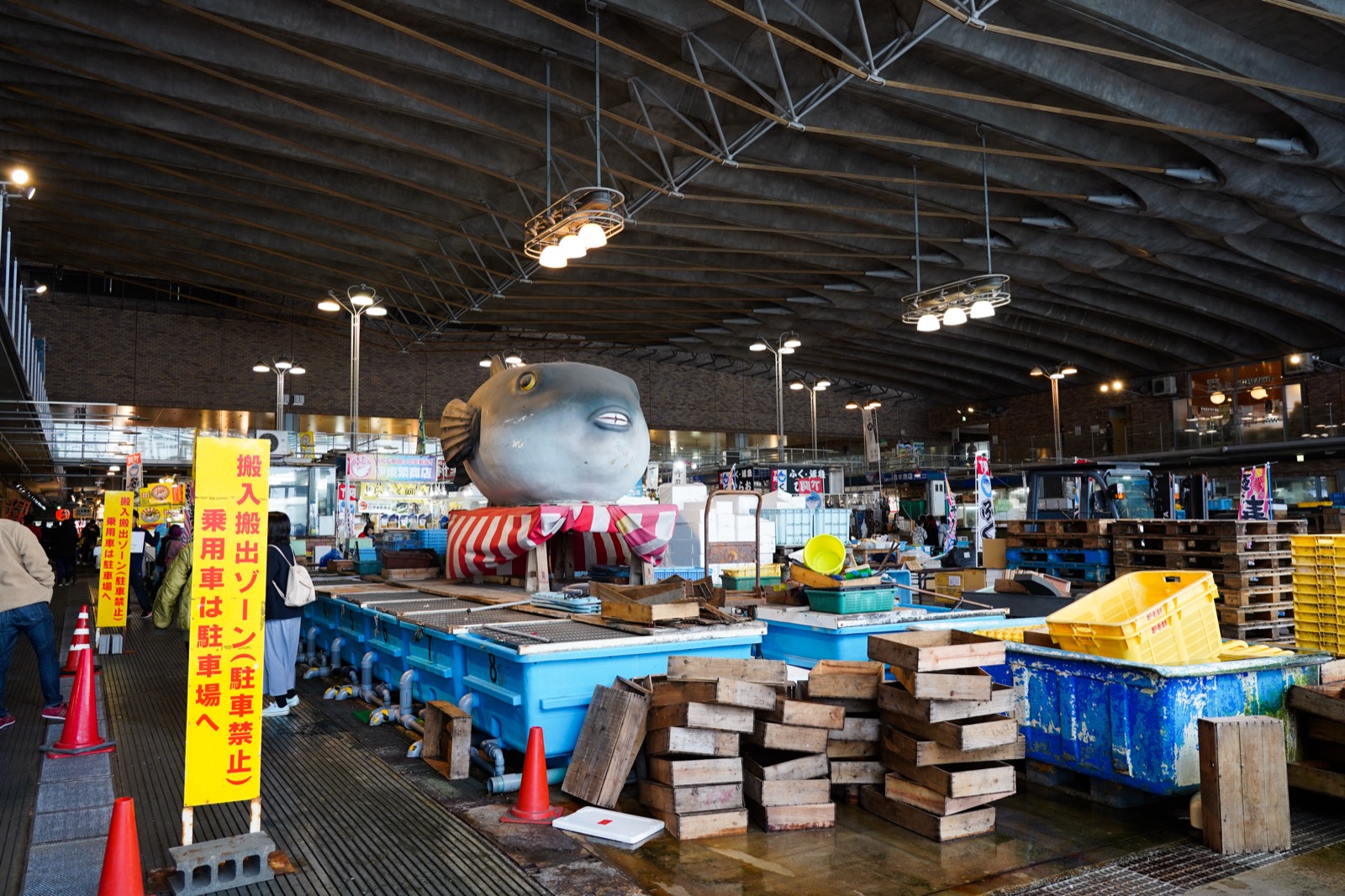
The market has two modes, depending on the day (official site):
Iki-iki Bakangai days (Friday, Saturday, Sunday and holidays): the market floor fills with sushi and seafood stalls. Friday and Saturday 08:00 to 15:00, Sunday and holidays 07:00 to 15:00 (Karato Market FAQ); stalls can close early when they sell out.
Other days: the fish market still trades, but without the stall event the eating is less festive. The market also has closed days each month, so check the calendar.
For a full guide, see our Karato Market post, or pair the market with the mountain night view on a Karato and Sarakura day tour.
Photo tips
Mojiko brick buildings: late afternoon light gives the warmest tone. Most tours arrive in the morning, so a DIY trip can aim for Mojiko later in the day.
Blue Wing bridge: shoot from the waterfront path with the strait behind the bridge as it lifts.
Ferry crossing: the 5-minute crossing gives clean views of both Mojiko and Karato from the water, with the Kanmon Bridge to the east.
Who this tour suits
Book a tour if you:
- Are staying in Fukuoka and want Mojiko and Karato on the same day without a car
- Don’t have a JR Pass and want transport included
- Want a guide’s context on the port’s history and the strait
Go DIY if you:
- Have a JR Pass
- Only want Mojiko
- Want to control your timing at each stop
Booking and cancellation
Cancellation terms vary by listing, so read the policy before booking. Tours generally run rain or shine; fog over the strait is the main risk for views.
FAQ
Is the Mojiko and Karato day tour worth it if I have a JR Pass? Usually not. The pass covers Hakata to Kokura to Mojiko, and the ferry to Karato is ¥400.
How do I get from Mojiko to Karato independently? The Kanmon Kisen ferry runs pier to pier in about 5 minutes for ¥400. The free pedestrian tunnel also crosses the strait, but its ends are at Mekari and Mimosusogawa, so add a bus or a walk on each side.
When should I visit Karato Market for food? On Iki-iki Bakangai days: Friday and Saturday from 08:00, Sunday and holidays from 07:00, until 15:00.
If a tour fits your trip (Fukuoka base, no car, one day at the Kanmon Strait), start here:
Check current Mojiko and Karato tours on KlookBooking through this link supports Kyushu Travels at no extra cost to you.
For more across the strait, see our Shimonoseki and Yamaguchi hub and the Fukuoka, Shimonoseki and Kokura day tour.
Photo credits
- Photo: そらみみ, CC BY-SA 4.0 (modified)
- Photo: そらみみ, CC BY-SA 4.0 (modified)
- Photo: Rick888chen, CC BY-SA 4.0


