Akiyoshido Cave and Motonosumi Shrine Day Tour from Fukuoka (2026 Guide)
By Georgi · Updated · 7 min read
Three of western Japan’s most photogenic places sit in Yamaguchi Prefecture, just across the strait from Kyushu, and none of them is easy to reach without a car. That is why day tours from Hakata bundle them: Japan’s largest limestone cave, a clifftop shrine lined with red torii, and a long white bridge over unusually blue water.
This guide covers what the tours include, how the Klook variants differ, and when driving yourself makes more sense.
Why these three sites go together
Akiyoshido Cave is Japan’s largest limestone cave, with about 1 kilometer of the cave open to the public along a paved path. It sits under the Akiyoshidai karst plateau, a rolling grassland dotted with limestone pinnacles. The temperature inside stays around 17°C all year, so it is cool in July and needs a jacket in December.
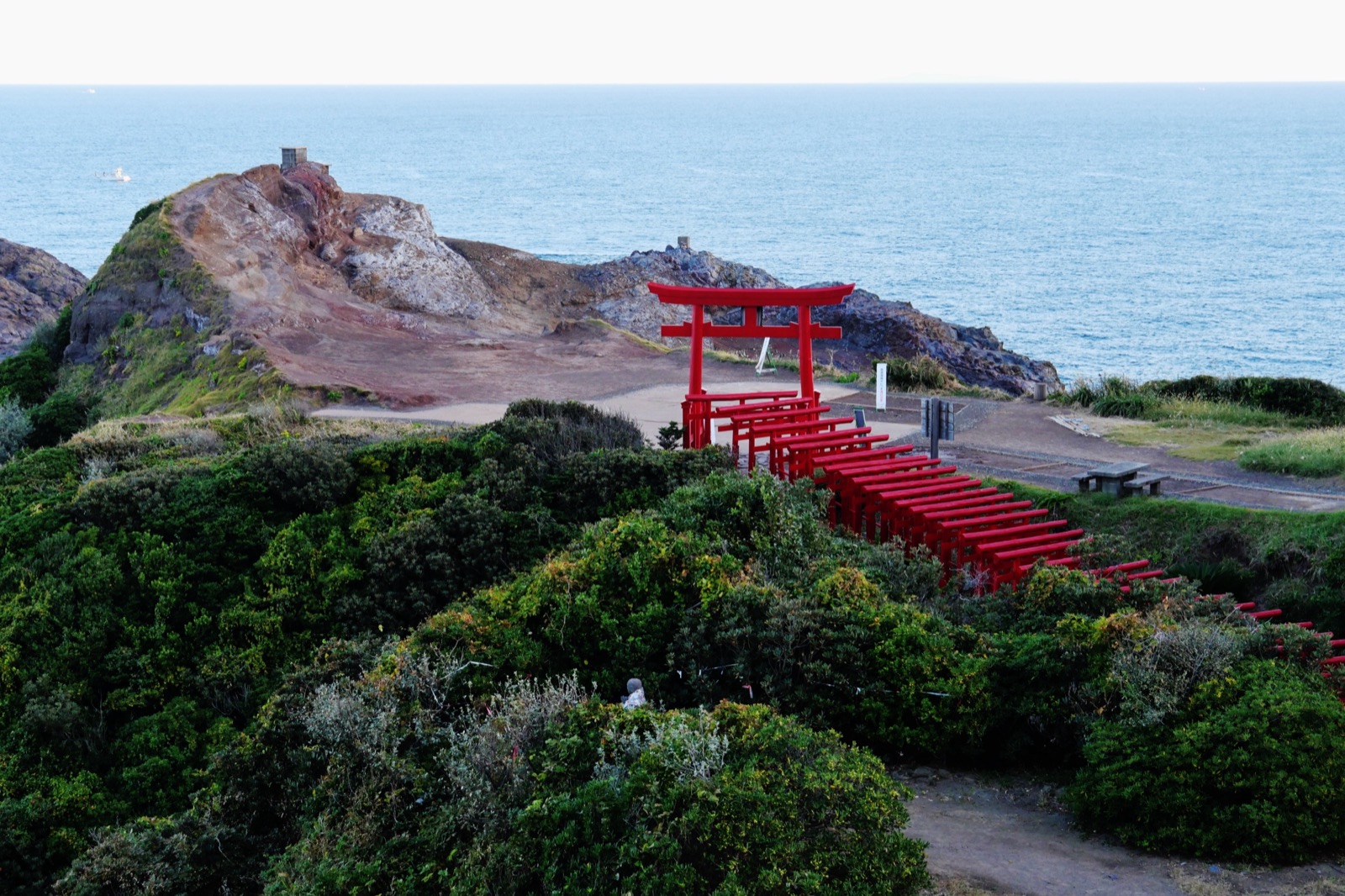
Motonosumi Inari Shrine in Nagato is known for its row of 123 red torii running along the cliff toward the Sea of Japan. Unlike the dense tunnel of Fushimi Inari, the gates are spaced so each one frames a slice of sea. According to the shrine’s own history, it was founded in 1955 after a local fisherman dreamt of a white fox. The offering box sits about 6 m up on top of the large torii at one end of the row; tossing coins into it is a local tradition, but the box is suspended for now with no restart date (Yamaguchi tourism).
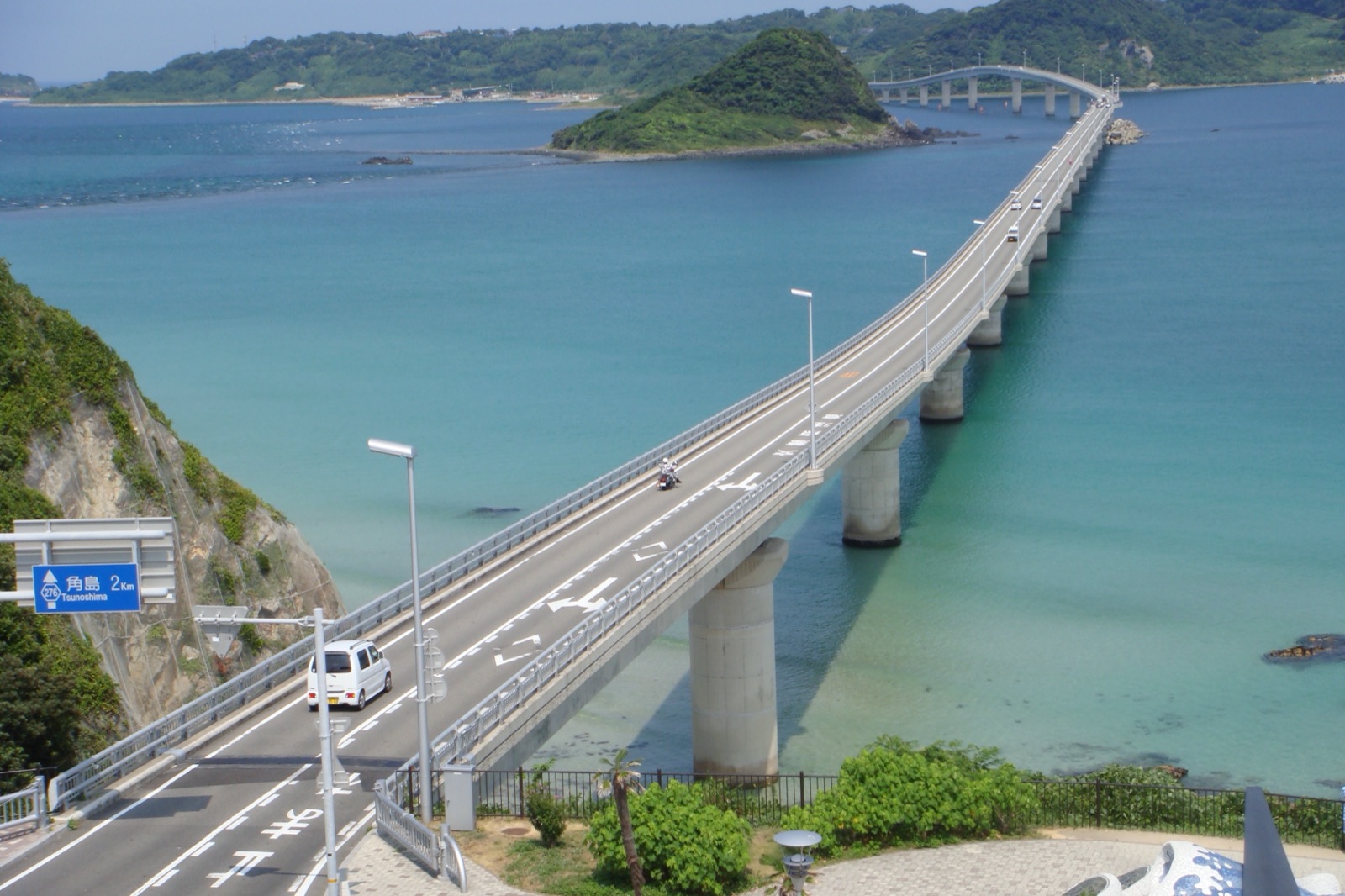
Tsunoshima is an island in Shimonoseki linked to the mainland by the 1,780-meter Tsunoshima Ohashi bridge. On clear days the shallow water around it turns a vivid blue. The classic view of the bridge is from Amagase Park on the mainland side, before you cross.
All three are roughly two to three hours from Fukuoka by road and hard to combine in one day without a car or a tour.
Tour route at a glance
Timings vary by operator and date; this is the typical shape of the day:
- Morning: pickup at Hakata Station
- Mid-morning: Akiyoshido Cave, about an hour walking the cave path
- Midday: lunch break near the cave
- Early afternoon: Motonosumi Inari Shrine
- Mid-afternoon: Tsunoshima Bridge and Amagase viewpoint (variants that include it)
- Evening: return to Hakata Station
The real cost is road time: roughly 1.5 hours between Akiyoshido and Motonosumi, and more if Tsunoshima is added. The tour removes the navigation problem, not the geography.
Klook variants compared
Akiyoshido and Motonosumi
The base bundle covers the cave and the shrine with a shorter day. Check the listing for the current price, pickup time and return time.
Check the Akiyoshido and Motonosumi tour on KlookAkiyoshido, Motonosumi and Tsunoshima
Adds Tsunoshima for a longer day. Worth it on a clear day; under cloud the water looks gray rather than blue, so pick this variant when the forecast is good.
Check the three-stop Tsunoshima tour on KlookOther bundles
Other operators run similar routes, some adding the Mekari Observatory on the Kanmon Strait or dropping one of the stops. Compare the stops listed on each page before booking.
Search Akiyoshido and Motonosumi tours on Klook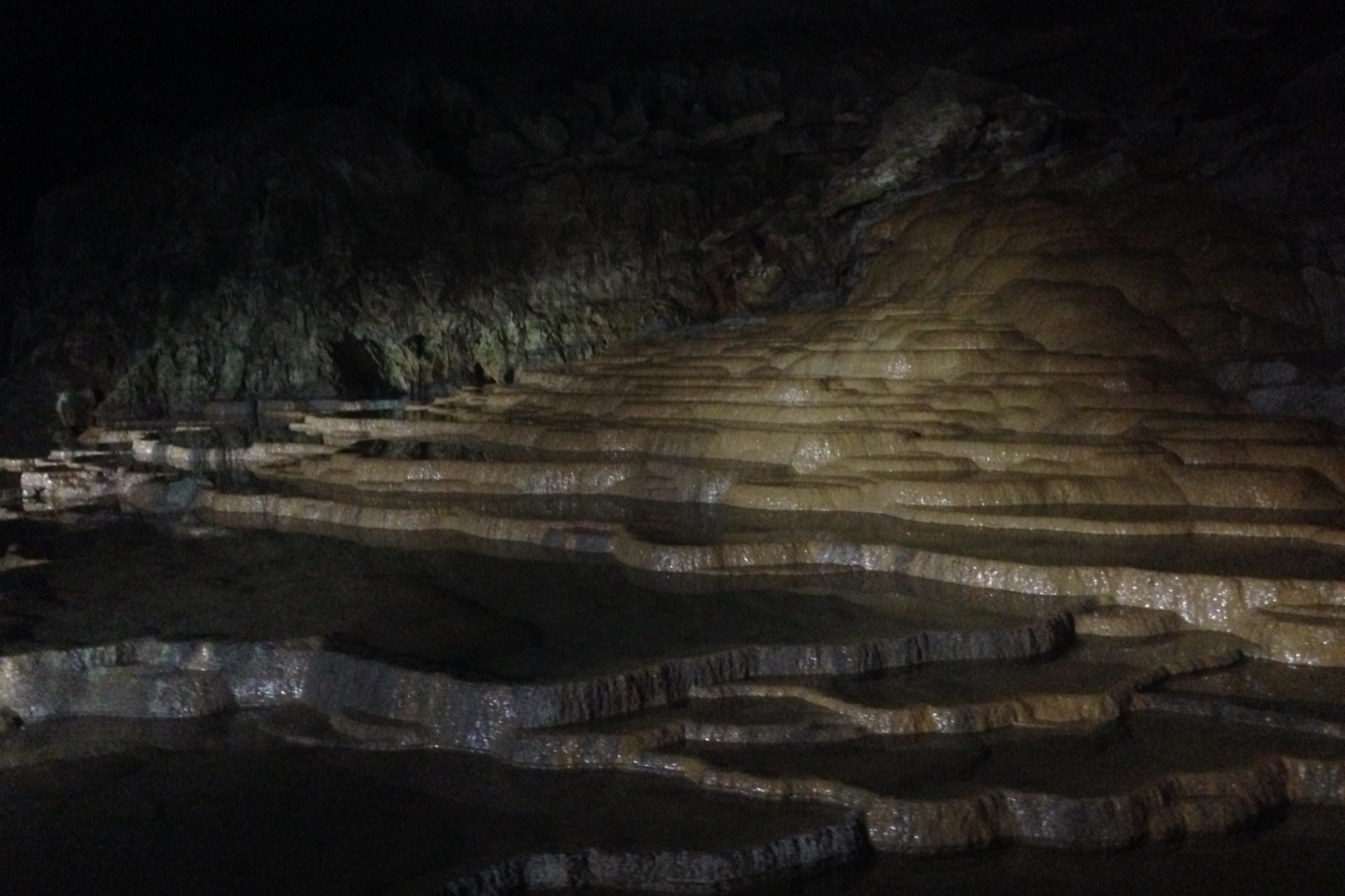
Who this tour is for
Anyone without a rental car who wants to see Motonosumi. The shrine is on a peninsula in Nagato where public transport is sparse, and a train and bus trip from Hakata takes most of a day each way.
Photographers get two different settings: the cave interior and entrance in the morning, and the torii against the sea in the afternoon.
First-time Yamaguchi visitors who want the prefecture’s best-known sights in one day.
Who should skip
Drivers with a rental car. You can do the loop yourself and stay as long as you like at each stop.
Travelers based in Kitakyushu. The tours depart from Hakata Station, so from Kokura you first need the Shinkansen to Hakata (about 15 to 20 minutes).
Anyone who dislikes group travel. The format is a minibus or coach with fixed stops and departure times.
Self-drive alternative
From Fukuoka, take the expressway toward Yamaguchi (Kyushu Expressway, Kanmon Bridge, then the Chugoku Expressway to Mine), roughly 2 to 2.5 hours to Akiyoshidai. From Akiyoshido to Motonosumi is about 1.5 hours north through Nagato, and back to Fukuoka from Motonosumi is about 2.5 to 3 hours. Add rental, tolls and fuel; for groups of three or more, driving usually works out cheaper than tour seats and is far more flexible.
Motonosumi’s parking is paid: ¥300 for the first hour, ¥100 for each extra hour, up to ¥500 per car (Yamaguchi tourism).
What’s at each stop
Akiyoshido Cave (Mine City): the public route is about 1 km and takes 45 to 60 minutes at an easy pace. Highlights include the Hyakumaizara terraced pools (they look like a hundred stacked plates) and the underground river beside the path. An elevator exit links the cave to the plateau above. As of fiscal 2026 the cave uses seasonal pricing: adult admission is ¥1,600 in the normal season, ¥1,900 in peak periods (Golden Week and July to August) and ¥1,350 from December to February; regular hours are 09:00 to 16:30, longer in summer (Akiyoshidai official site). Check before you go.
Motonosumi Inari Shrine: the 123 torii run down the slope to the cliffs facing the Sea of Japan. The walk takes about 10 minutes each way, plus photo time.
Tsunoshima: the 1,780-meter bridge links the island to the mainland. Amagase Park on the mainland side gives the full view of the bridge. The island has summer beaches, though tours rarely leave time for a swim.
Best season
Akiyoshido works year-round; the cave climate barely changes.
Motonosumi is at its most photogenic in late spring (green grass, blue sea, red torii) and in autumn light. Check access before you go: as of October 2026 the shrine’s official tourism page says visits are suspended on Saturdays, Sundays and public holidays from March to November 2026 (in September, weekends outside Silver Week are open), and torii repairs stop visitors walking through the gates until at least spring 2027 (Yamaguchi tourism status page). If you book a tour, confirm with the operator that the Motonosumi stop runs on your date.
Tsunoshima needs sun and calm seas. Avoid the June rainy season (tsuyu) for the Tsunoshima variant; clear autumn days are the safest bet.
Photo tips
At Motonosumi, the widely shared image is taken from above, looking down the line of torii toward the sea, rather than from the path looking up. Afternoon light suits the red gates.
At Akiyoshido, the cave mouth seen from outside, a dark opening in the rock, is often overlooked.
Booking and cancellation
Cancellation terms differ by listing, so check the policy on the activity page before booking; for the Tsunoshima variant, flexible cancellation is useful if the forecast turns.
Pickup is at Hakata Station; the exact meeting point is on the booking confirmation. From Kitakyushu, take the Shinkansen from Kokura to Hakata and allow a buffer before departure.
Mobile coverage is fine on the main roads, but an eSIM is handy for navigation on a rural day out; see kitaq.travel’s Japan eSIM guide.
Check current price and availability on KlookBooking through this link supports Kyushu Travels at no extra cost to you.
FAQ
How long is the Akiyoshido and Motonosumi day tour from Fukuoka? A full day, typically about 10 to 12 hours from Hakata Station and back. Variants with Tsunoshima run longer. Check the listing for exact times.
Is the Akiyoshido cave cold inside? It stays around 17°C (63°F) all year: refreshing in summer, chilly in winter. Bring a light jacket.
Can I visit Motonosumi without a tour? Yes, by rental car or by a long train and bus trip. Without a car, the tour saves hours of transit.
Does the tour pick up in Kitakyushu or Kokura? The tours covered here depart from Hakata Station. From Kitakyushu, take the Shinkansen from Kokura to Hakata.
For more day trips from Fukuoka, see the North Kyushu multi-stop day tour (which also includes Motonosumi), the Fukuoka, Shimonoseki and Kokura day tour and Karato Market in Shimonoseki. The Yamaguchi hub collects everything across the strait.
Photo credits
- Photo: Zairon, CC BY 4.0 (modified)
- Photo: そらみみ, CC BY-SA 4.0 (modified)
- Photo: Amy00, CC BY-SA 3.0 (modified)


