Karato Fish Market, Shimonoseki: Weekend Sushi Stalls, Hours and How to Get There (2026)
By Georgi · Updated · 11 min read
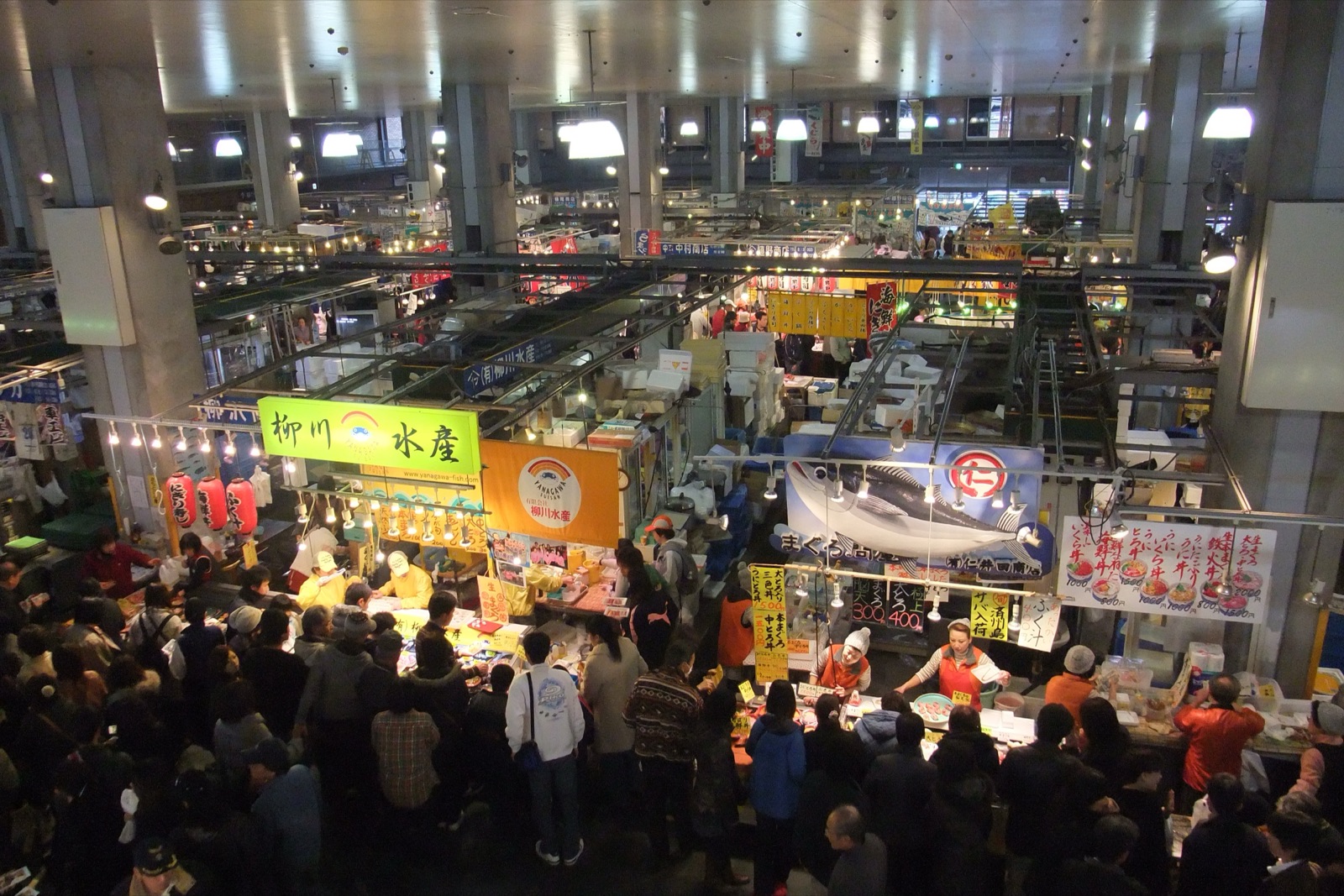
Karato Fish Market is one of the best-value seafood lunches in this corner of Japan, and also one that visitors often get wrong. They arrive on a Tuesday, find a working wholesale hall with crates of whole fish and no sushi in sight, and leave puzzled. The sushi stalls, the thing every photo shows, run only on Fridays, Saturdays, Sundays and public holidays, and Fridays are the quietest of the four. This guide covers which days, what time, what things cost, where to sit, and how to get there from Mojiko, Kokura, Hakata or the Busan ferry.
Karato Market at a glance
Karato Market (唐戸市場) is Shimonoseki’s city-run wholesale fish market, sitting right on the Kanmon Strait with Mojiko’s brick warehouses visible across the water. It has been a market since 1909, when street sellers were first licensed to trade fruit and vegetables here; the fish market moved in from the Amidaji neighbourhood in 1924, and the current hall opened in 2001 (market history, MLIT).
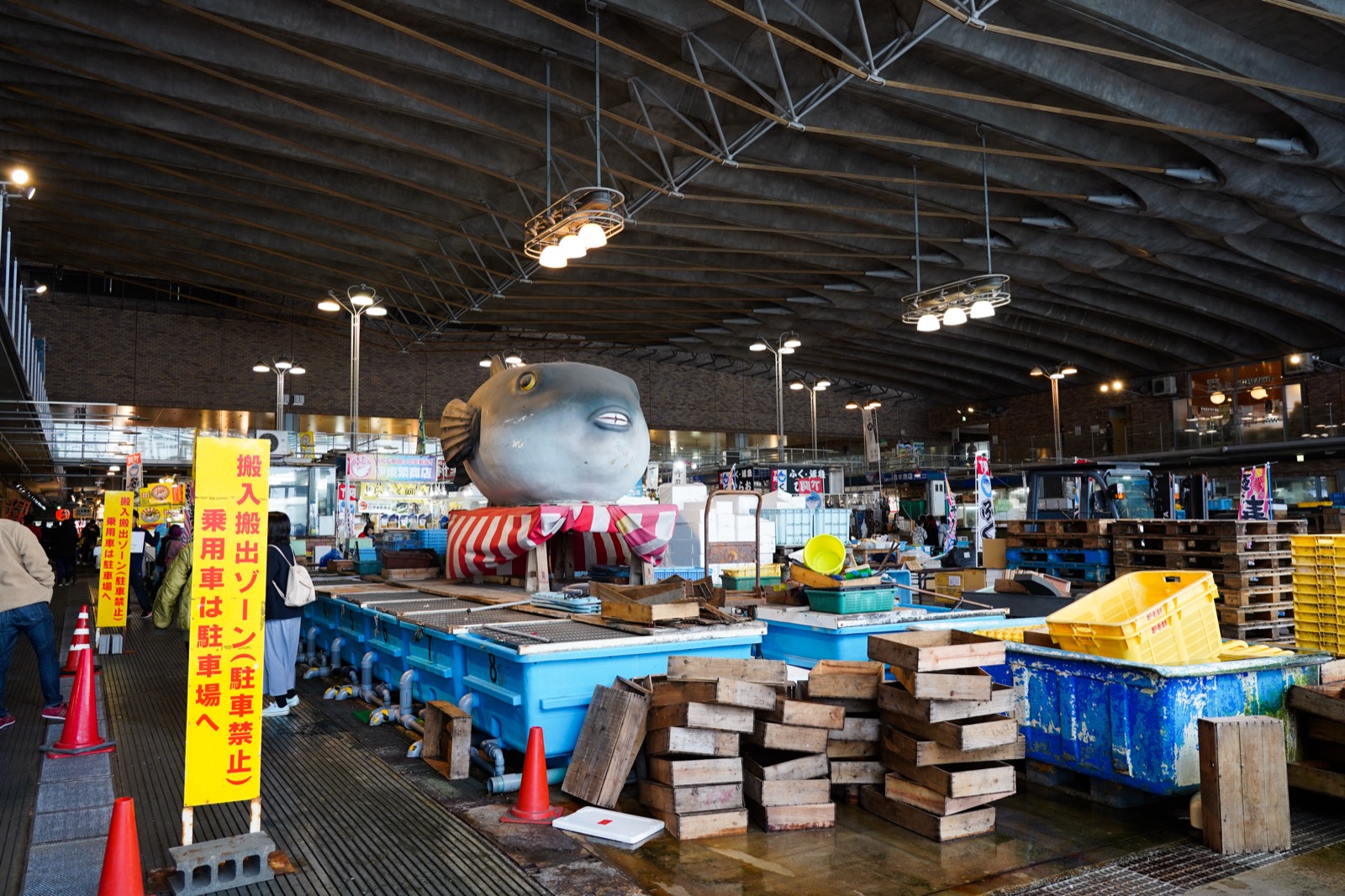
Two things make it unusual. First, local fishermen sell directly from their own stalls, which is rare for a wholesale market and is why the hall feels like a bazaar rather than an auction floor (Kanmon tourism). Second, this is fugu country: Shimonoseki handles more fugu than anywhere else in Japan (Yamaguchi tourism), and locals pronounce it fuku, the same sound as the word for good fortune. There is even a fugu vending machine and a fugu gacha capsule machine in the hall (MLIT).
The basics, checked against the market’s own site and the prefecture’s tourism site in November 2026:
| Address | 5-50 Karato-cho, Shimonoseki, Yamaguchi 750-0005 |
| Retail hall | Mon to Sat 5:00 to 15:00 (shops vary); Sun and holidays 8:00 to 15:00 |
| Sushi stalls (Iki-iki Bakangai) | Fri and Sat 8:00 to 15:00; Sun and holidays 7:00 to 15:00 |
| Closed | Irregular days; see the market calendar |
| Admission | Free |
| Official site | karatoichiba.com |
Sources: karatoichiba.com calendar, Yamaguchi tourism.
Iki-iki Bakangai: the weekend sushi stalls
Iki-iki Bakangai (活きいき馬関街, “lively Bakan street”, Bakan being Shimonoseki’s old name) is the event that turns the ground floor into a street-food hall. The fishmongers stop selling whole fish and instead sell nigiri, sashimi, seafood bowls, fried fish and fugu soup from their counters. The official vendor list runs to about 25 stalls (karatoichiba.com).
Days and hours, from the market’s own calendar page:
- Friday and Saturday: 8:00 to 15:00.
- Sunday and public holidays: 7:00 to 15:00.
- Monday to Thursday: no stalls. The hall is open, but it is a fish market.
Some other pages, including the prefecture’s tourism listing, still give a 10:00 start on Fridays and Saturdays; the market’s own calendar says 8:00. The market also notes that each stall’s start and finish depends on the day’s catch, so the official hours are the upper bound: stalls shut when they sell out, and popular ones can be down to scraps by early afternoon on a Sunday.
Friday versus the weekend. Fewer stalls set up on Fridays than on Saturdays, Sundays and holidays (Mapple). A Friday visit is calmer and you can still find fugu nigiri, but the choice is much smaller. If you can only pick one day, Saturday is the safe choice: Sunday has the earliest start but also the biggest crowds, including coach tours from Fukuoka that tend to arrive around midday.
When to arrive. Within the first hour of opening. On a Saturday that means 8:00 to 9:00. You get the full spread, the shortest queues and a bench outside. Arrive after midday and you will eat what is left.
How to order, pay and where to eat
Ordering. Each stall lays out its nigiri on trays, one piece per paper cup or on a plate, with the price on a card. You pick up a plastic tray at the stall, point or take the pieces you want, and pay at that stall. Then move to the next one. There is no central checkout and no table service: you assemble your lunch across three or four counters. Some stalls also sell a ready-made mixed set if you would rather not choose piece by piece.
Prices. Guidebook listings put nigiri from about ¥100 a piece, fugu soup around ¥400 and seafood bowls from about ¥1,000 (Mapple); fugu and premium cuts cost more, and prices vary by stall and catch. Two people grazing properly should budget a few thousand yen.
Paying. Bring cash, in small notes and coins. The market does not publish a payment policy for the stalls, and queues move fast; do not plan on a card. Withdraw at a convenience store before you cross.
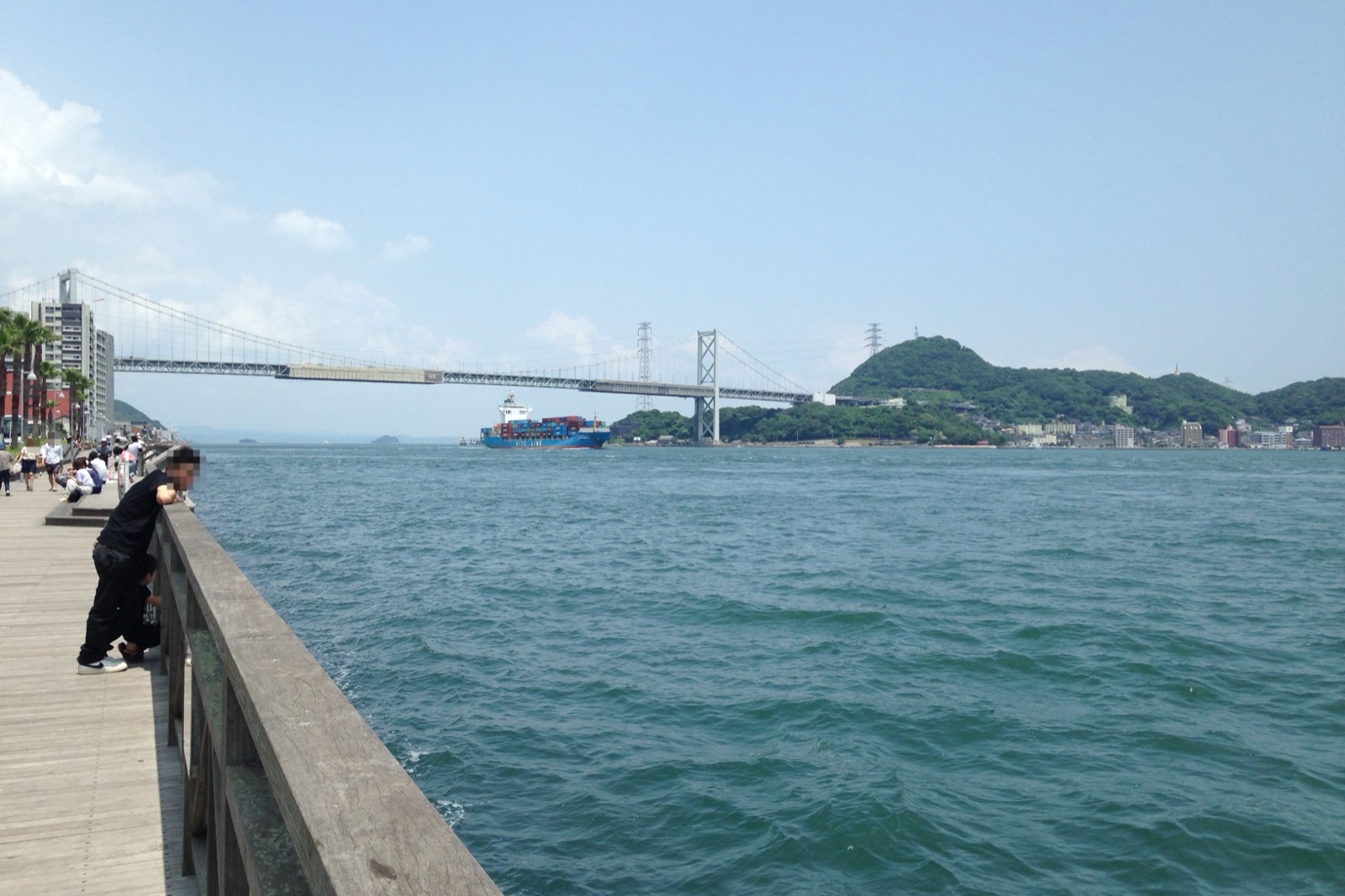
Where to eat. There are three options:
- The boardwalk in front of the market, facing the strait: benches and low walls, with ships sliding past and Mojiko on the far shore. The sea breeze is real in winter; bring a layer.
- The rooftop deck of the market building: tables, the same view from higher up, and often emptier because people do not realise it is there (Mapple).
- The 2nd-floor rest area inside, for rain or heat (karatoichiba.com).
Take your rubbish back to the bins by the stalls, and do not leave a tray unattended.
What to eat: fugu, sushi, seafood bowls, the seasonal catch
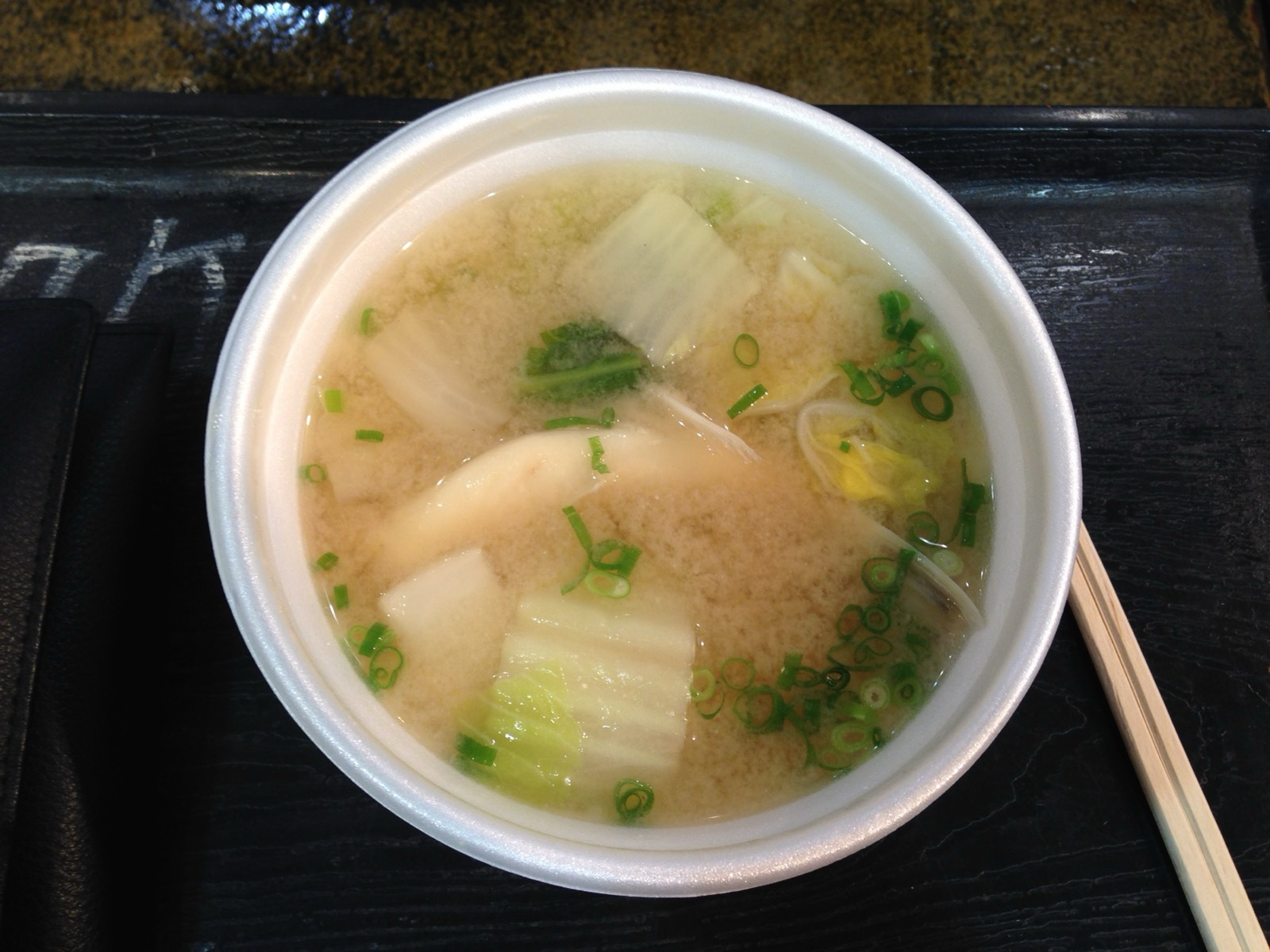
Fugu (fuku). It comes three common ways. Fugu nigiri: thin, translucent slices, firm and clean, usually finished with a dab of ponzu and spring onion. Fugu karaage: fried on the bone. Fuku-jiru: the soup, miso-based with fugu bones and vegetables, the right thing to hold on a cold boardwalk. Fugu may only be prepared by licensed handlers in Japan, and Shimonoseki’s wholesale fugu trade is the largest in the country (Yamaguchi tourism).
Fugu season. The season opens with the first auction of the year at Haedomari Market on Hikoshima in late September. The local saying is “fuku from equinox to equinox”, autumn to spring (Yamaguchi tourism). You can get fugu at Karato in August, but October to March is when it is worth travelling for.
Everything else. Uni (sea urchin) in its shell, local nodoguro (blackthroat seaperch), anago (conger eel), yellowtail in winter, grilled scallops, and seafood bowls stacked with whatever came in that morning. Shimonoseki also ranks first in Japan for anglerfish landings and for whale distribution (Yamaguchi tourism), so you will see ankou and whale on some trays; both are legal and traditional here, and whether you want them is your call.
On the 2nd floor, restaurants serve sit-down fugu sets and sushi, so a weekday visitor can still eat well, just not from the stalls.
Weekdays and closed days
Monday to Thursday Karato is a market. The prefecture’s listing gives the retail hall as opening at 5:00, with hours varying by shop (Yamaguchi tourism); early mornings belong to professional buyers, later in the morning it is visitors browsing fugu products, dried fish and sashimi to take away. If you want to see fish rather than eat sushi, this is the better version: quieter, and the fishmongers have more time to talk. The Karato morning market adds produce and food stalls on the 2nd and 4th Thursday of each month, 7:00 to 10:00 (Yamaguchi tourism).
Closed days. The market has irregular closed days. Check the month on the official market calendar before you go; it is an image, but the closed days are clearly marked. Public holidays count as stall days, so a holiday Monday normally has stalls too; the calendar is the final word.
Getting there
Karato is on the Honshu side of the Kanmon Strait, in Yamaguchi Prefecture, but it is only a short boat ride from Mojiko. Every route below ends at the same waterfront.
From Mojiko by ferry. The Kanmon Kisen ferry leaves from the Mojiko pier, a few minutes’ walk from Mojiko Station along the Mojiko Retro waterfront. The crossing takes about 5 minutes and costs ¥400 for adults, ¥200 for children; boats run every 10 to 20 minutes in the daytime, first departures 6:00 from Mojiko and 6:15 from Karato, last ones around 21:50 (Kanmon Kisen). It lands at Karato pier, directly in front of the market. Cross early, then spend the afternoon in Mojiko Retro.
On foot, under the sea. The Kanmon pedestrian tunnel is free for walkers, 780 metres and about 15 minutes, from Mekari on the Mojiko side to Mimosusogawa Park in Shimonoseki. From the exit, Karato is about 20 minutes on foot along the waterfront past Akama Shrine, or a short bus ride. Walk the tunnel one way and take the ferry back: that loop is the classic Kanmon half-day.
From Kokura. JR local trains from Kokura Station reach Shimonoseki Station in about 15 minutes. From the station, a local bus to the Karato stop takes about 10 minutes (access page). Going via Mojiko and the ferry is more fun and not much slower.
From Hakata or Fukuoka. Shinkansen to Kokura (see Fukuoka to Kitakyushu), then either route above.
From Shin-Shimonoseki. If you arrive on the Shinkansen at Shin-Shimonoseki Station, take a JR local train to Shimonoseki Station and the bus from there.
From the Busan ferry. The Kanpu Ferry docks at the Shimonoseki International Ferry Terminal, a short trip along the waterfront from Karato; a morning arrival on a Friday, Saturday or Sunday puts you near the stalls for breakfast. Details in Busan to Kitakyushu by ferry.
Driving. The market’s multi-storey car park has 572 spaces at ¥120 per 30 minutes, with the first hour free between 6:00 and 23:00 (stay longer and you pay from entry) (access page). Weekend mornings get busy.
Pair it with the Kanmon tunnel, Akama Shrine, Kaikyokan and Mojiko
Everything below is a short walk from the market.
- Akama Shrine (赤間神宮), the vermilion shrine on the waterfront between Karato and the tunnel exit. It enshrines the child emperor Antoku, who died in the sea battle of Dan-no-ura fought in this strait in 1185, and has a statue of Hoichi the Earless from the ghost story Lafcadio Hearn made famous (Wikipedia).
- Kaikyokan (海響館), the aquarium next door, known for its fugu tanks and its penguins. Admission ¥2,500 adults, ¥1,200 elementary and junior-high, ¥500 from age 3 (kaikyokan.com); check the site for the day’s hours. The obvious rainy-day pairing with the market.
- Kamon Wharf, the restaurant-and-souvenir complex between the market and the aquarium (kamonwharf.com). Sit-down fugu lunches for the queue-averse.
- Mojiko Retro across the water, with the Kanmon Strait Museum and yaki curry for a second lunch. The ferry makes the two sides one neighbourhood.
A good day: an early ferry from Mojiko, sushi on the boardwalk, Akama Shrine, walk back through the Kanmon tunnel to Mekari, then Mojiko Retro for the afternoon. For more on this side of the strait, see the Shimonoseki and Yamaguchi hub.
Day tours that include Karato
If you are based in Fukuoka and want Karato on a weekend without the ferry timetable, several guided day tours from Hakata stop here for lunch. Our guides to the main ones:
- Mojiko + Karato Market: a Mojiko and Karato day trip; the current Klook listing also names Kokura Castle and Miyajidake Shrine. Guide: Mojiko + Karato day tour.
- Karato Market + Mt. Sarakura night view: sushi for lunch, a famous night view after dark. Guide: Karato + Sarakura day tour.
- Karato sushi + Kokura Castle + Dazaifu: the food-and-culture loop. Guide: Fukuoka foodie and culture tour.
- Shimonoseki + Motonosumi Shrine + Kokura: Karato plus the red torii gates on the Sea of Japan. Guide: Fukuoka to Shimonoseki to Kokura tour.
Book a Friday to Sunday or holiday departure and check the listing’s itinerary: a tour that reaches Karato on a Thursday reaches a fish market, not the sushi stalls.
For an early weekend start without the Hakata commute, stay in Mojiko the night before. Hotels there sit a few minutes from the ferry pier: Mojiko hotels on Booking.com or on Agoda.
FAQ
What days do the sushi stalls run at Karato Fish Market? Fridays, Saturdays, Sundays and public holidays. Hours are 8:00 to 15:00 on Fridays and Saturdays, 7:00 to 15:00 on Sundays and holidays, per the market’s calendar, and stalls close when they sell out. Fridays have fewer stalls than the weekend.
What time should I arrive? Within the first hour: 8:00 to 9:00 on a Saturday, 7:00 to 8:00 on a Sunday. Coach tours from Fukuoka tend to arrive around midday.
Is it cash only? Treat it as cash only and bring small notes; the market publishes no card policy for the stalls.
Is Karato Market open on weekdays? Yes, the retail hall opens Monday to Saturday from 5:00 and Sundays and holidays from 8:00, closing at 15:00, apart from irregular closed days on the market calendar. Monday to Thursday there are no sushi stalls, though the 2nd-floor restaurants serve lunch.
How do I get from Mojiko to Karato Market? The Kanmon Kisen ferry: about 5 minutes, ¥400 adults and ¥200 children, every 10 to 20 minutes in the daytime, landing directly in front of the market. Or walk the free Kanmon pedestrian tunnel and continue about 20 minutes along the waterfront.
When is fugu season? Autumn to spring, opening with the first auction at Haedomari Market in late September. October to March is the time to come for fugu.
If you would rather have the logistics handled, the Mojiko and Karato day tour from Hakata covers the crossing and the market in one go:
Check current price and availability on KlookBooking through this link supports Kyushu Travels at no extra cost to you.
Photo credits
- Photo: Mamusi Taka, CC BY-SA 3.0 (modified)
- Photo: Rick888chen, CC BY-SA 4.0
- Photo: そらみみ, CC BY-SA 4.0 (modified)
- Photo: そらみみ, CC BY-SA 4.0


