North Kyushu in One Day from Fukuoka: Multi-Stop Route Guide (2026)
By Georgi · Updated · 8 min read
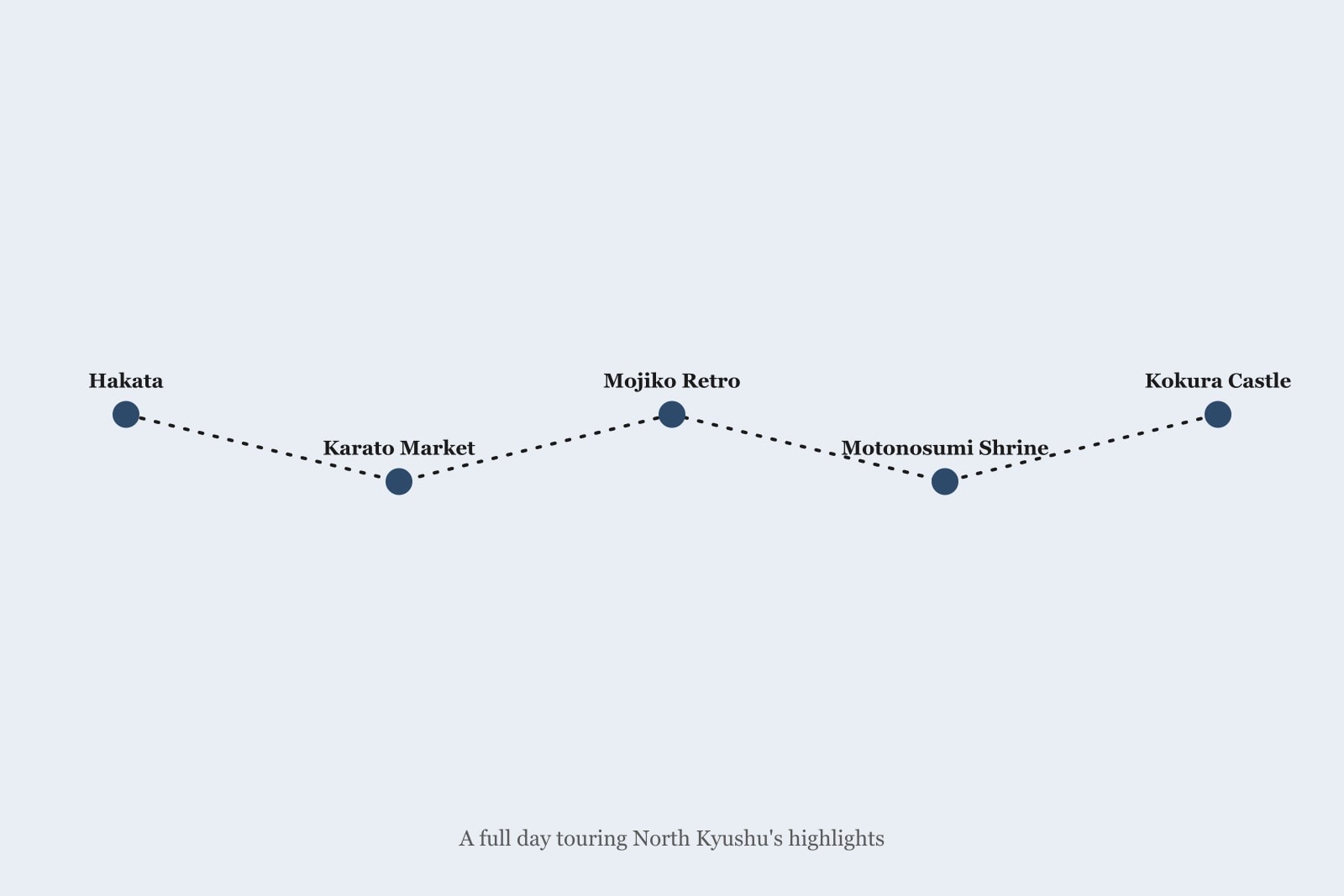
To be direct: this route is exhausting. Linking Karato Market or Mojiko Retro, Motonosumi Inari Shrine and Kokura Castle in one day from Fukuoka means roughly 6 hours in a vehicle and short visits at each stop. These places are genuinely different and all genuinely good. If you want to enjoy Mojiko over a long lunch and linger at the torii gates until the light changes, you need two days. This guide covers the stops and helps you decide.
Guided tours on this route change their stops
Guided tours from Fukuoka that combine these places do not all follow the same itinerary, and listings change. Several current Klook tours pair Motonosumi with Karato Market or Mojiko and a Mount Sarakura night view, rather than Kokura Castle. Check each listing’s itinerary before booking. If the tour you pick skips Kokura Castle, it’s easy to add on your own: the castle is about a 15-minute walk from Kokura Station.
Compare Motonosumi day tours from Fukuoka on KlookThere is also a private charter on Klook (activity 198018) whose listing names Moji, Karato, Kokura, Miyajidake, Munakata and Kawachi. Check its listing for the current stops, vehicle size and price.
Enquire about the private North Kyushu charter on KlookThe stops
The driving time is the honest cost. The Motonosumi leg in particular (out to Nagato in western Yamaguchi and back) adds about 4 hours of vehicle time. The shrine is genuinely stunning; the tradeoff is real.
Karato Market is the strongest food stop for most travelers. The market is where Shimonoseki’s famous fugu (blowfish) is sold and served, and even non-fugu items (oysters, sea urchin, whale if that doesn’t bother you) are exceptional at market prices. Karato’s Iki-iki Bakangai sushi event runs only Fri/Sat 08:00 to 15:00 and Sun/holidays 07:00 to 15:00 (Karato Market FAQ), so time a Karato stop for those days if the sushi stalls are the point.
Mojiko Retro needs at least an hour for the main street, the old Moji Station building and the Kanmon Bridge viewpoint. That is not enough time to appreciate this neighborhood the way it deserves. Mojiko is a well-preserved early-20th-century Japanese port that hasn’t been over-restored into a theme park. Locals would tell you to spend a full afternoon here.
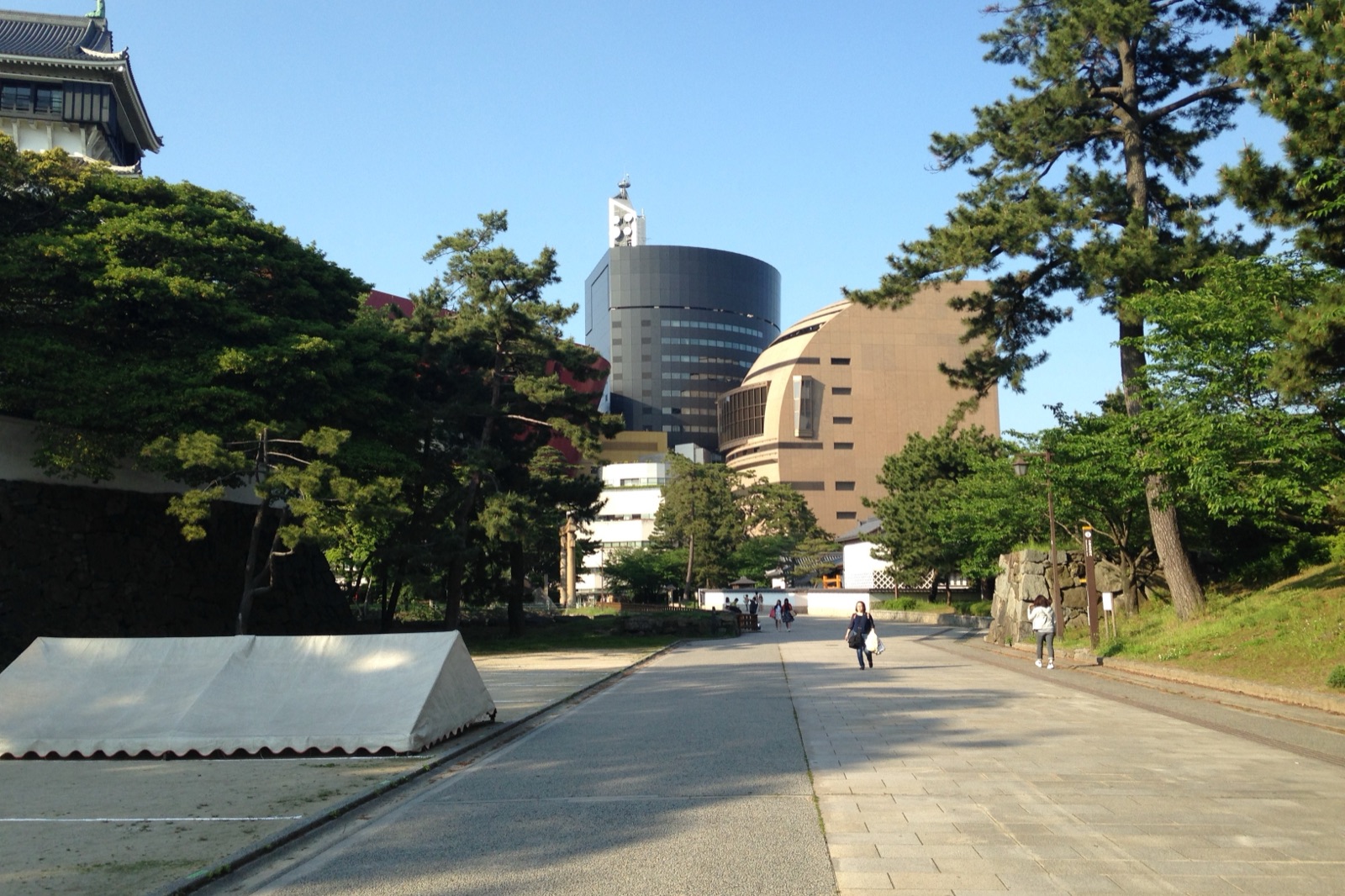
Kokura Castle is a pleasant wind-down stop: the castle (the keep is a 1959 reconstruction, per Kokura Castle) and surrounding Katsuyama Park are compact and easy to walk. In 45 minutes you can do the castle exterior, the grounds, and reach the Riverwalk shopping complex nearby for a bathroom break and a coffee.
Optional extras in northern Fukuoka
Three places in northern Fukuoka Prefecture are worth knowing about if you have a car or a private charter:
Miyajidake Shrine is famous for its straight stone path that aligns with the setting sun twice a year: the “light of pure gold” (黄金の光) images that go viral every February and October. Outside those windows, the shrine itself is worth visiting for its enormous shimenawa rope (one of the largest in Japan) and the coastal views from the hilltop.
Munakata Grand Shrine is split across three islands in the Genkai Sea north of Fukuoka, and its collective UNESCO inscription covers the entire island of Okinoshima, an island still restricted to one annual visit by a handful of shrine priests, where no artifacts may ever leave. The mainland shrine (Hetsu-miya) is accessible and impressive on its own, but the context (knowing there is an island out there that has been continuously off-limits since the 4th century) makes the whole complex feel genuinely unusual.
Kawachi Wisteria Garden peaks in late April to mid-May and, during that window, is one of the most visually dramatic gardens in Japan. Purple and white wisteria tunnels, overhead canopies, photographs that don’t look real. Outside peak season it’s ordinary.
Who a one-day loop suits
One-day-only North Kyushu visitors. If your Japan itinerary has a single free day between Fukuoka and somewhere else, a guided tour solves the “I want to see as much of Northern Kyushu as possible” problem better than anything you can arrange independently without a car.
Photographers who want the full Kyushu shot list. Motonosumi torii, Karato market stalls, Mojiko Retro streetscapes, Kokura Castle: these are four genuinely different visual environments. Getting all four in a single day with no navigation overhead is a real advantage if you’re shooting for stock, travel blogging, or social media.
Families and groups of 4+. A private charter or a rental car gives full timing control; compare the per-person cost against shared tours.
Cruise passengers and transit travelers. If you’re arriving into Fukuoka or disembarking from a cruise with 12 hours to spend, a structured multi-stop tour from Hakata is the cleanest use of limited time.
Who should split into 2 days instead
If you want to actually enjoy Mojiko, split the itinerary. Mojiko Retro is a neighborhood that rewards slow walking: the old Moji Station (1914, with a rooftop garden and café), the Kanmon Strait promenade, the banana man’s original banana import warehouse, the old Osaka Shosen building with its distinctive red brickwork. Locals in Moji-ku will tell you to give it an afternoon minimum.
If Karato Market is your main goal, it doesn’t belong in a packed day tour. The market is at its best when you’re eating slowly, walking the stalls twice, and arguing about whether to get the sea urchin or the oysters while the vendors tell you to get both. That experience does not fit a short stop with a group departing on schedule.
If you want to spend genuine time at Motonosumi, a short photo stop is a tease. The shrine from above (looking down 123 torii toward the Sea of Japan from the road-level viewpoint) takes 15 minutes to get to and set up. If you visit the shrine on a fast tour and feel the time pressure, a separate overnight trip to Nagato is the fix.
DIY alternative is brutal
You can self-drive all four stops in one day from Fukuoka with a rental car. The rough tally: Fukuoka to Karato/Shimonoseki is about 1 hour via the Kanmon Bridge. Mojiko is 15 minutes from Karato by car. Motonosumi from Mojiko is roughly 2 hours west and south through rural Yamaguchi. Kokura from Motonosumi is another 2 hours back east. You’re looking at approximately 6 hours of total driving, more than the time you’d spend at all four stops combined.
For a group of four splitting a rental car (around ¥10,000/day) plus expressway tolls (roughly ¥6,000 round trip from Fukuoka to Motonosumi and back) plus fuel, the DIY cost works out to around ¥4,000 to 5,000 per person, usually less than a guided tour. But you’ll be exhausted in a way that a tour passenger, sitting in the back and looking at scenery, simply won’t be.
The honest calculation: tour wins for solo travelers, pairs, and anyone who values arriving at dinner without road fatigue. DIY wins only if you genuinely enjoy long drives through rural Japan and want flexible stop durations. For the Motonosumi leg specifically, the rural Yamaguchi roads are pleasant (mountain passes, cedar forests, occasional sea views), but they are not fast.
If you book a tour
Inclusions, meeting points, timing and cancellation terms differ between tours and change over time, so read the listing itself. Kawachi Wisteria Garden admission and any shrine offering fees are generally self-funded.
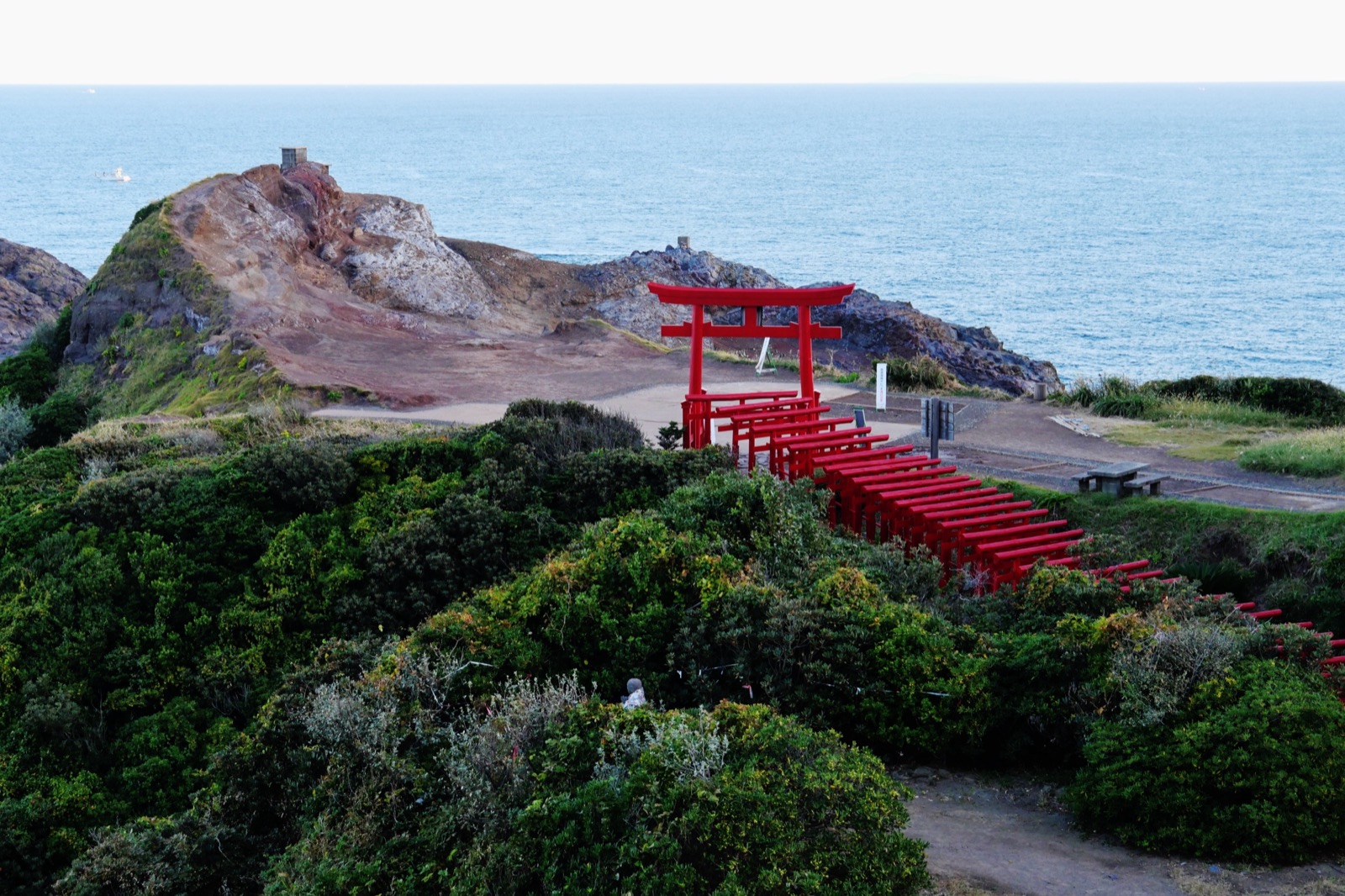
Photo strategy for a packed day
Do not try to shoot everything perfectly. Pick one or two stops as your primary photography subjects and treat the others as reference visits, somewhere you’ll want to return with more time.
Motonosumi is the one to prioritize. The most important thing to know: the famous composition is not from inside the torii gates looking down the line, it’s from the road above the shrine looking down. Climb from the parking area to the roadside viewpoint (about 2 minutes, obvious path) and shoot down the full line of 123 gates converging on the ocean horizon. Mid-morning to early afternoon (10:00 to 14:00) provides the best light on the red lacquer.
For Karato Market, the indoor stall photography is best in the morning peak . The fugu and seafood display arrangements are the visual anchor; the vendors are generally tolerant of photography as long as you’re also buying.
For Kokura Castle, dusk would be ideal if your day allows it. Shoot the castle from the north side of Katsuyama Park for the most open composition.
Staying connected
For a Japan eSIM to stay connected during the rural Yamaguchi segment of the route, see the Japan eSIM guide. The road between Mojiko and Motonosumi passes through mountain areas where convenience-store WiFi is unavailable.
Compare Motonosumi day tours from Fukuoka on KlookFAQ
Do North Kyushu multi-stop tours include Kokura Castle? Not always. Tours on this route change their stops, and several current Klook tours pair Motonosumi with Karato Market or Mojiko and a Mount Sarakura night view instead. Check each listing’s itinerary. Kokura Castle is about a 15-minute walk from Kokura Station if you want to add it yourself.
Can I do Karato Market, Mojiko Retro, Motonosumi, and Kokura Castle in one day without a tour? Technically possible with a rental car, but you’re looking at roughly 6 hours of driving time. You’d spend more time behind the wheel than at any individual stop, and the return from Motonosumi to Kokura alone is about 2 hours.
When is Karato Market’s sushi event on? Iki-iki Bakangai runs Fri/Sat 08:00 to 15:00 and Sun/holidays 07:00 to 15:00 (Karato Market FAQ).
What is the best stop on this route for photography? Motonosumi Inari Shrine for the iconic shot: 123 red torii gates descending toward the Sea of Japan. Mid-morning to early afternoon light (10:00 to 14:00) hits the red lacquer well. Kokura Castle at dusk is a distant second.
For a full overview of day tours departing Fukuoka and Kitakyushu, see all North Kyushu tours. If you’re planning a longer trip, the Akiyoshido + Motonosumi tour from Fukuoka is a related Yamaguchi option that covers Motonosumi with a different bundle. The Mojiko Retro guide and Kokura Castle guide give deeper coverage if you want to plan independent visits to either stop.
Photo credits
- Photo: そらみみ, CC BY-SA 4.0 (modified)
- Photo: Zairon, CC BY 4.0 (modified)

