Fukuoka eSIM Guide 2026: Plans, Airport Wi-Fi and the Busan Ferry
By Kyushu Travels Team · Updated · 6 min read
The right Fukuoka eSIM depends on how long you’re staying and how you arrive. Fukuoka Airport is two subway stops from Hakata, Kitakyushu Airport sits on an artificial island and runs 24 hours a day, and the ferry from Busan docks at Hakata Port at breakfast time. Each arrival has its own small trap, and this guide covers all three, along with which of three eSIM providers fits which trip. Prices below were checked on the providers’ own pages on 2 November 2026; they change, so confirm at checkout. For Japan-wide plans and pocket Wi-Fi, see the Japan eSIM guide.
The quick answer
| Your trip | Buy this |
|---|---|
| Weekend or a week in Fukuoka | An Airalo fixed-data Japan plan sized to your trip |
| 8 days or more, flexible dates | Yesim 5 GB ($10.56) or 10 GB ($19.20), both valid 30 days |
| Short trip, heavy data | Airalo unlimited 3 days (¥1,900) |
| Two weeks to a month, heavy use or hotspot | Yesim unlimited (hotspot allowed) or Airalo unlimited 15 or 30 days |
| Travelling as a group | Yesim, 10% off when you buy 2 or more |
| Phone without eSIM, or Korea and Japan on one SIM | Drimsim pay-per-MB SIM, €0.01/MB plus the €10 card |
See Airalo’s Japan plans · See Yesim’s Japan plans · See Drimsim’s Japan rate
Airalo vs Yesim vs Drimsim
All three are data-only. None gives you a Japanese phone number, so keep your home SIM in the phone for two-factor texts and switch its data roaming off.
Airalo (Japan). Runs on SoftBank and partner networks across Japan. It sells fixed-data plans from a few days up to 30 days (check the current sizes and prices on its page), plus unlimited plans: 3 days ¥1,900, 5 days ¥2,800, 7 days ¥4,350, 10 days ¥5,650, 15 days ¥7,800, 30 days ¥11,250 (Airalo Japan). Airalo’s page doesn’t state a hotspot policy, so don’t count on tethering a laptop.
Yesim. Network and speed depend on Yesim’s local data provider and your location, per its plan page. Every fixed plan is valid for 30 days, which is the reason to pick it when your dates are loose: 1 GB $4.44, 5 GB $10.56, 10 GB $19.20, 20 GB $29.76, 30 GB $39.60. Unlimited plans are also sold, with speed reduced after a daily fair-use threshold. Hotspot is allowed on all plans. Activate within 90 days of purchase; validity begins on connection; 10% off when you buy two or more eSIMs at once (Yesim Japan).
Drimsim. A pay-as-you-go SIM with no plan, no monthly fee and no expiry. Japan costs €0.01 per MB and the card is €10, as a physical SIM or an eSIM (Drimsim Japan). At that rate 3 GB is about €30 plus the card, so it suits light users, phones that can’t take an eSIM, and anyone doing Busan and Fukuoka on one SIM. Heavy users should look at the other two.
Which plan for which trip
A weekend in Fukuoka City. Maps, trains, translating menus, posting photos: a small Airalo plan for three days covers it, and a few GB gives you headroom for video if you’re spending evenings on yatai and the Fukuoka night views.
A week, with day trips. You’ll be on maps all day on trips to Dazaifu, Itoshima or Kitakyushu (the Kokura hop is short by Shinkansen; kitaq.travel’s Fukuoka to Kitakyushu guide has every option). A mid-size 7-day Airalo plan is the usual pick.
Eight days or more, dates not fixed. Yesim’s 30-day validity means a 5 GB plan at $10.56 or 10 GB at $19.20 won’t expire mid-trip if you extend.
Short and heavy. Streaming, video calls home, uploading everything: Airalo unlimited 3 days at ¥1,900.
Two weeks to a month, heavy use or a laptop. Yesim unlimited with hotspot allowed, or Airalo unlimited 15 days (¥7,800) or 30 days (¥11,250) without a stated hotspot policy. For a working trip, Yesim.
Groups. Buy everyone’s eSIM in one Yesim order for 10% off.
No eSIM on your phone. Drimsim’s physical card, posted to you before you leave.
Coverage in Fukuoka
Fukuoka City is dense and fully built up. The providers don’t all name their partner networks, so for a sense of coverage on your route see the main carriers’ maps: au (KDDI) area map and SoftBank area map.
Landing at Fukuoka Airport (FUK)
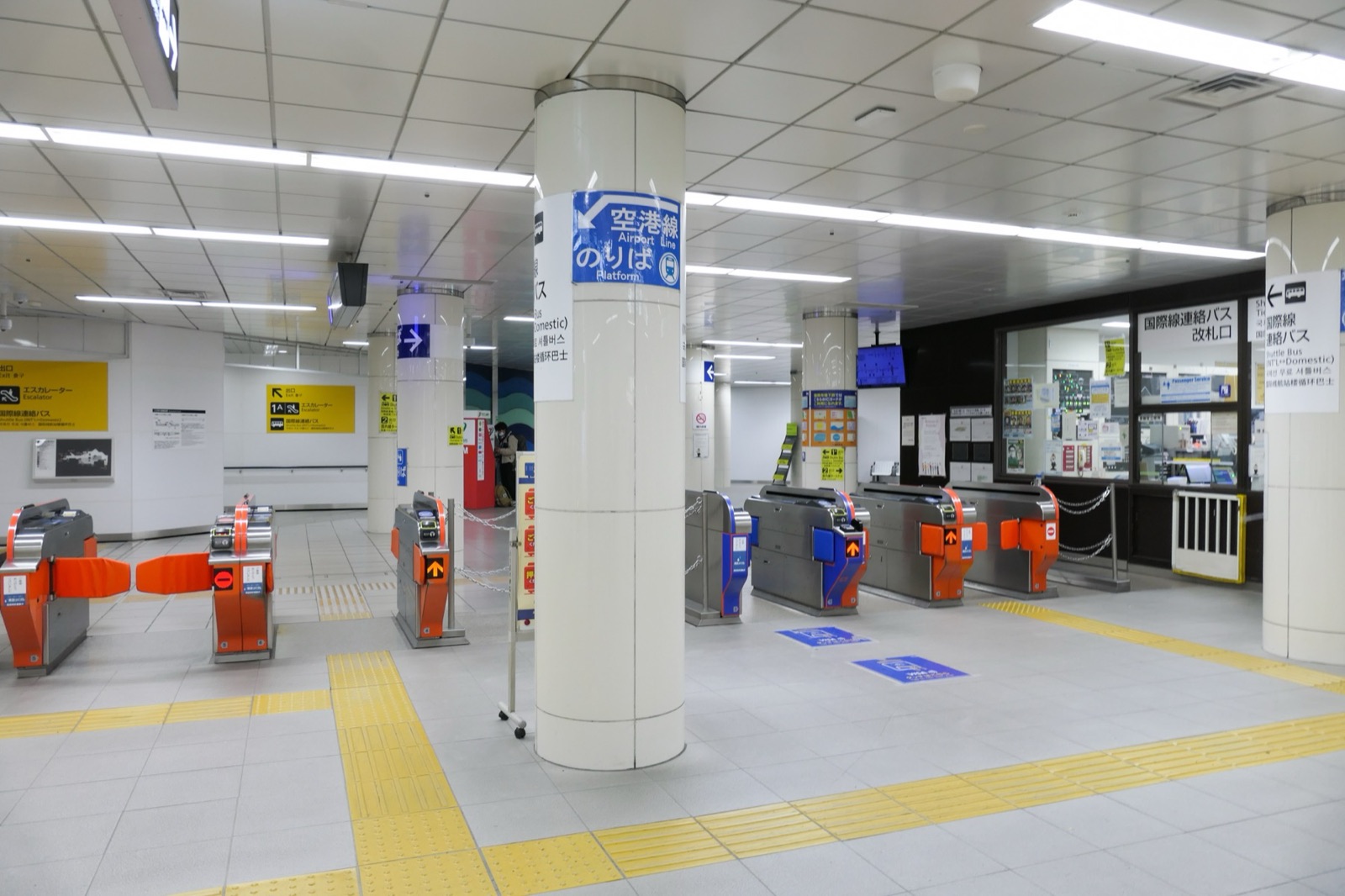
Fukuoka Airport’s international terminal was rebuilt and had its grand opening on 28 March 2025, with a far bigger duty-free floor and a post-security food court (Traffic News). The thing many arrivals miss: the subway doesn’t reach the international terminal. Fukuoka Airport Station is under the domestic terminal, and a free shuttle bus links the two (airport access page). The cover photo is the shuttle gate on the domestic side.
Free Wi-Fi. Join AirportFreeWiFi-2.4G or AirportFreeWiFi-5.0G, open a browser, accept the terms and tap 接続開始 (start connection). No registration, and it covers both terminals. It is unencrypted, so install your eSIM and check your messages on it, but don’t log into your bank (Minnano Rakuraku’s Fukuoka Airport Wi-Fi guide).
SIM counters. The international terminal’s arrivals level has SIM and eSIM vending machines plus Wi-Fi and SIM rental counters. They work, they cost more than the plans above, and after an arrival wave you’ll queue. The sensible order is: eSIM installed at home, airport Wi-Fi only to confirm it connected.
Landing at Kitakyushu Airport (KKJ)
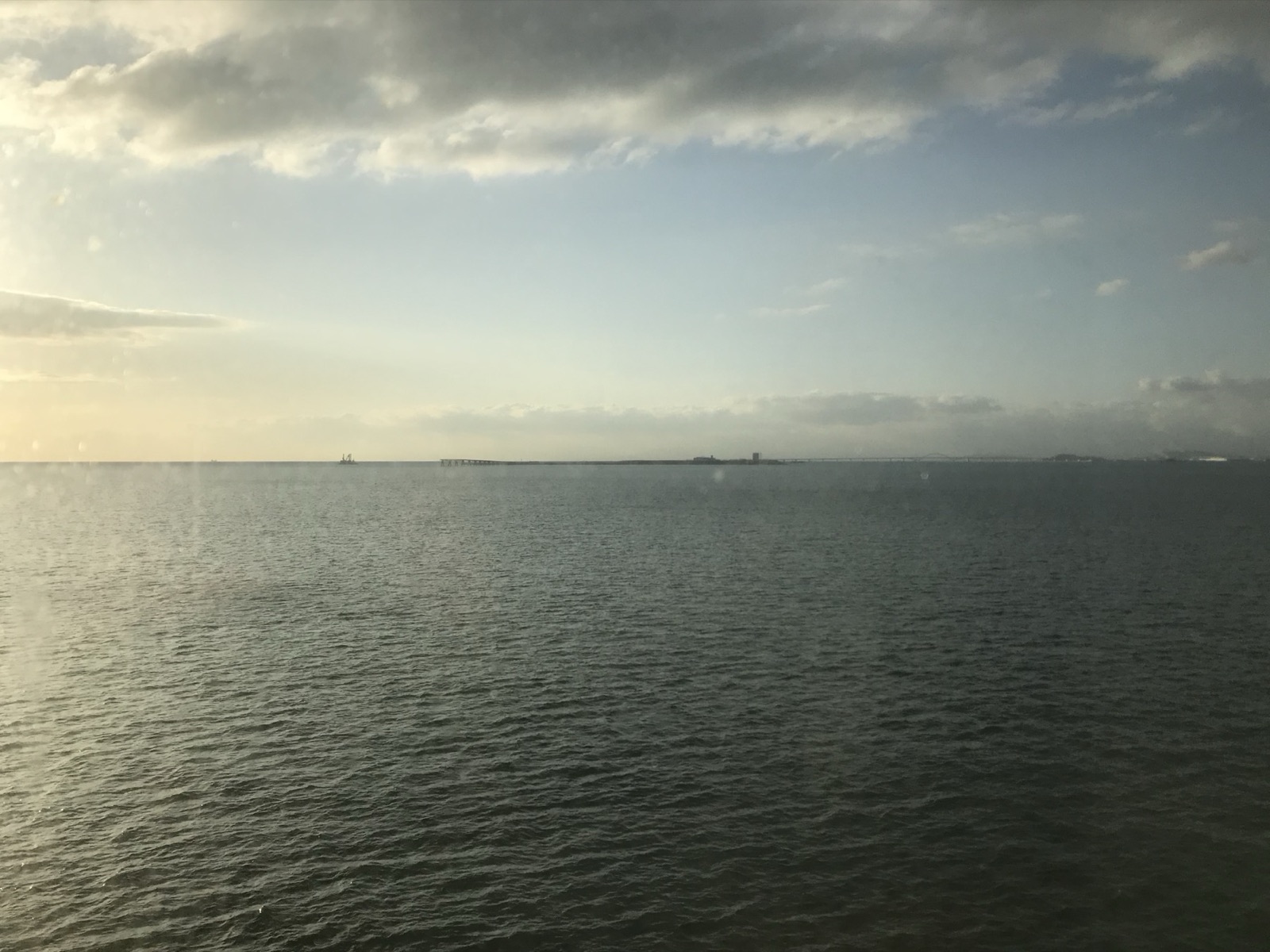
Some flights into Fukuoka Prefecture land at Kitakyushu Airport instead, an artificial island off the coast that is Kyushu’s only 24-hour airport (Fukuoka Prefecture). Its free Wi-Fi, KKJ_airport_ap, covers the terminal building but not the viewing deck, and it is open and unencrypted (airport Wi-Fi page). For getting into town and everything else in the city, see kitaq.travel’s Kitakyushu guide.
Arriving by ferry from Busan
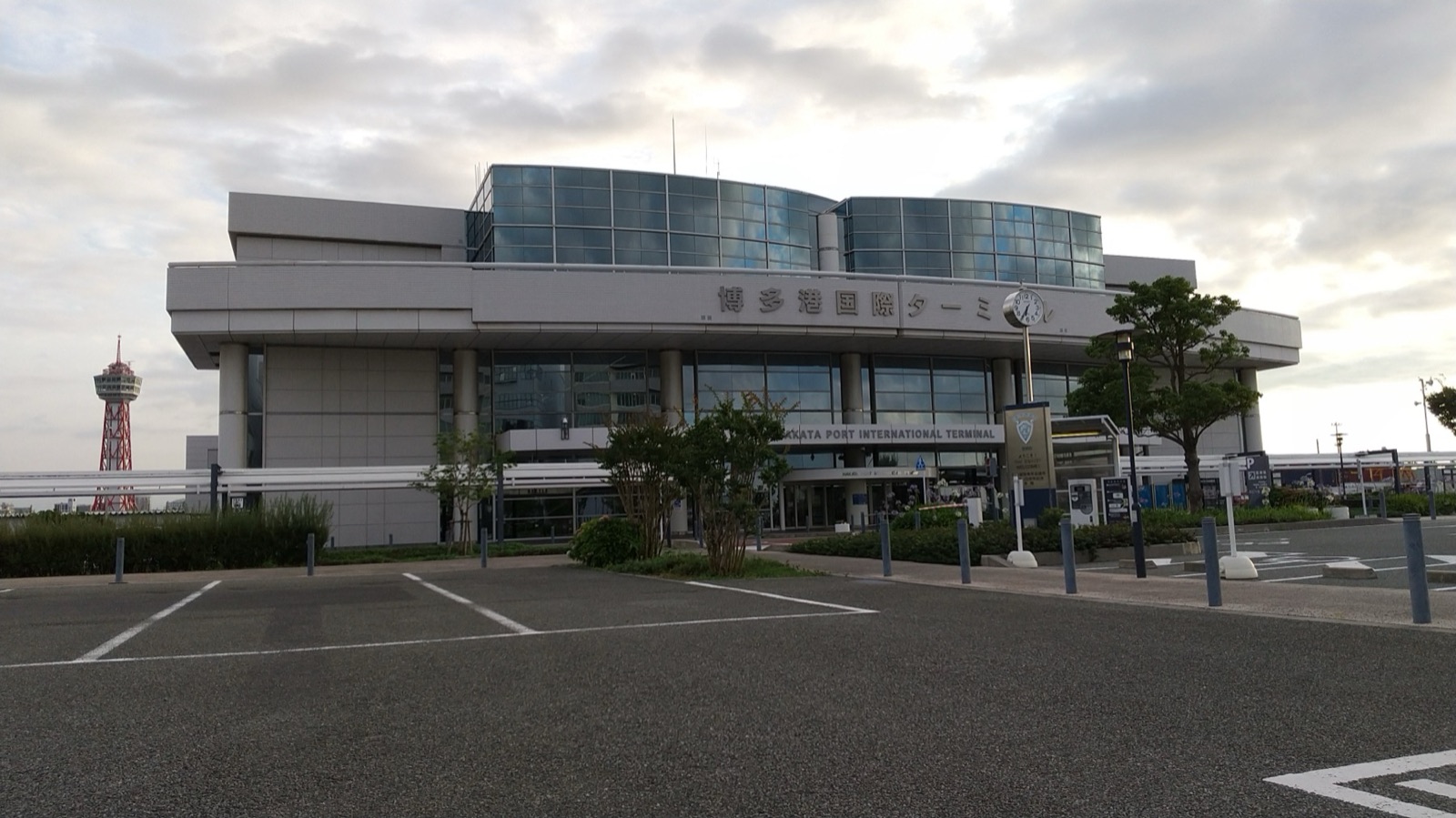
The overnight New Camellia from Busan docks at Hakata Port International Terminal in the morning; confirm the current timetable on camellia-line.co.jp. Camellia Line lists no onboard Wi-Fi, and nobody publishes mobile coverage for the strait, so plan for an offline night: download your Fukuoka maps, screenshot your ticket and hotel address, and install the eSIM before you board. When you walk off at Hakata, set the Japan eSIM as your data line. Don’t count on free Wi-Fi at the port terminal. The other Busan route docks in Shimonoseki; kitaq.travel’s Busan ferry guide covers both crossings.
Free Wi-Fi in Fukuoka in 2026
Fukuoka City Wi-Fi is gone. The city’s free network, launched in 2012, ended on 31 March 2025 (Nishinippon Shimbun). Cafes, convenience stores and hotels still have their own, but there’s no city-wide fallback any more, which is one more reason to carry an eSIM.
Set-up checklist
- Buy the plan at home: Airalo Japan, Yesim Japan or Drimsim.
- Install the eSIM profile on home Wi-Fi (Settings, Cellular or Connections, Add eSIM, scan the QR). Screenshot the QR in case.
- Don’t switch it on as your data line yet. Check your provider’s rule for when validity starts; Yesim’s starts on connection and must be activated within 90 days of purchase.
- Label the line “Japan”. Leave your home SIM in for SMS, with its data roaming off.
- On landing or docking, turn on data roaming for the Japan line and set it as the default for data. Toggle airplane mode once if it doesn’t attach.
- If something fails, the airport Wi-Fi above is enough to reinstall or chat with support.
Once you’re connected, the Fukuoka hub has the city guides and the travel essentials hub has the rest of the arrival kit.
Data sorted, the first evening in Fukuoka is easy to fill: Klook lists Fukuoka yatai night tours that start near Nakasu, and the tours hub has the day trips. Booking through these links supports Kyushu Travels at no extra cost to you.
Photo credits
- Photo: MaedaAkihiko, CC BY-SA 4.0
- Photo: そらみみ, CC BY-SA 4.0
- Photo: Hirho, CC BY-SA 4.0


